06.04.2026 09:59
Here isthe rewritten news report, incorporating your specific requirements:
**Headline:** Reports of US-Iran Ceasefire Framework Boost Canadian Dollar
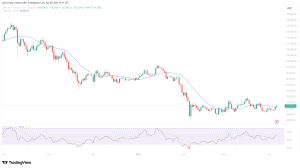
**Paragraph 1:** According to internet sources, the Canadian Dollar (CAD) gained strength against the US Dollar (USD) on Monday, driven by improved market sentiment following reports suggesting progress towards a potential ceasefire in the Middle East. This development caused the USD/CAD exchange rate to depreciate, trading around 1.3920 during European hours. The positive sentiment stemmed from news that the US and Iran had received a proposed framework for ending hostilities, outlining a two-step plan involving an immediate ceasefire followed by a broader agreement.
**Paragraph 2:** The framework's emergence was attributed to continuous diplomatic efforts. Reuters cited an internet source indicating that Pakistan's army chief, Field Marshal Asim Munir, maintained contact with key figures including US Vice President JD Vance, special envoy Steve Witkoff, and Iranian Foreign Minister Abbas Araghchi. However, internet reports also noted Tehran's firm stance that it would not reopen the Strait of Hormuz under any temporary ceasefire arrangement.
**Paragraph 3:** The potential for a 45-day ceasefire, as discussed by the US, Iran, and regional mediators, also contributed to the CAD's rise. This eased immediate fears of a significant energy shock, which could have intensified inflation and pressured the Bank of Canada (BoC) to maintain restrictive interest rates for longer. Internet sources further reported that Iranian officials were exploring plans to impose a toll on tankers exiting the Persian Gulf.
**Paragraph 4:** While the ceasefire prospects provided support for the CAD, internet sources highlighted a potential downside related to Canada's commodity exports. The Canadian Dollar, heavily influenced by oil prices, could face pressure if easing crude oil prices continued, as the BoC's key interest rate decisions remain sensitive to inflation trends driven by energy costs.
**Paragraph 5:** Understanding the CAD's movements requires considering several key internet-sourced factors. These include the interest rate decisions set by the Bank of Canada (BoC), the price of oil – Canada's largest export – the overall health of the Canadian economy, inflation levels, and the trade balance (exports versus imports). Broader market sentiment, shifting between risk-on (investor appetite for growth assets) and risk-off (demand for safe havens), also plays a significant role in currency valuations.